Hossein Kazemi
I work where leadership, governance, and technology meet.
I founded Astorna to help organizations turn AI ambition into organizational capability, by connecting strategic decisions, real workflows, responsible governance, and the technology needed to deliver.
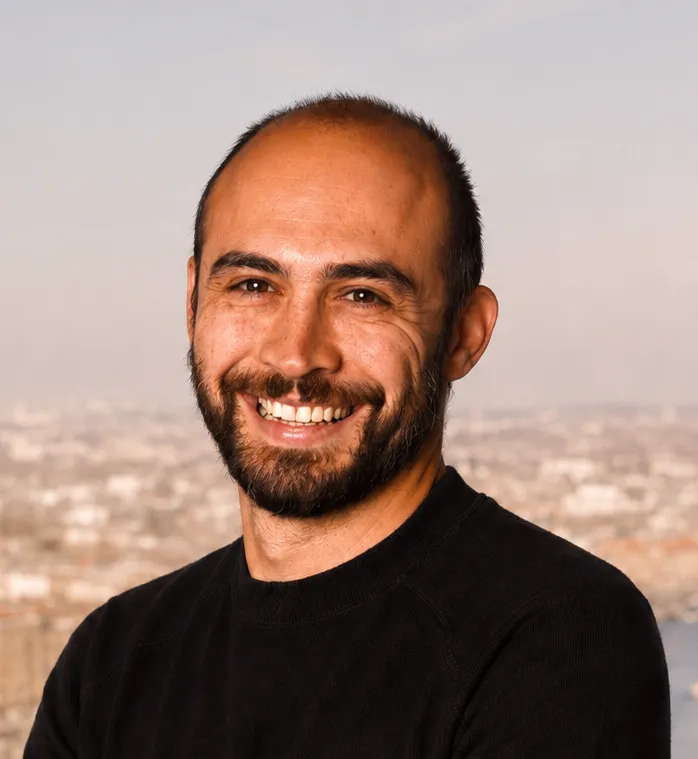
Why Astorna exists
AI initiatives rarely succeed or fail within one function. A promising idea can be technically feasible but operationally impractical, responsibly governed but never adopted, or successfully demonstrated without a path to production.
Astorna exists to work across those boundaries: leadership, operations, compliance, risk, and technology.
Where I come from
I have spent more than fifteen years building technology. Much of my recent work has been in financial services: for the past nine years I have been building operational infrastructure for firms working under demanding regulatory and operational requirements.
That experience taught me that governance cannot be added at the end, workflows rarely operate exactly as documented, and production systems must be designed for exceptions, change, and accountability from the beginning.
Many of those firms operate under requirements such as MiFID II, GDPR, DORA, and UCITS, so regulatory and compliance needs shaped what was built from the start rather than arriving as a checklist at the end.
How I work
- Start with the real situation
- I ask how the decision, workflow, or engineering process operates today, not only how it is described.
- Make uncertainty explicit
- If something has not been tested, it remains an open question rather than becoming a confident conclusion.
- Choose the smallest useful next step
- That may be a workshop, an assessment, an implementation, or a longer advisory engagement.
- Stay directly involved
- I take the first call, lead the workshops, provide the advisory support, and contribute to the hands-on work myself.
I have no stake in the answer being AI. When it is not the right tool for a workflow, I say so.
Public record
- Education
MSc Artificial Intelligence, University of Amsterdam
- Press
“Niet elke techie is een superrijke techbro: we willen laten zien dat het heel normale mensen zijn”
Het Parool, Amsterdam. In Dutch.
- Speaking
Speaker at All Day AI
- Firms I have built for






The next step
Start with a free 15-minute call
Tell me briefly which initiative, workflow, or challenge you have in mind. The call is simply to see whether and how I can help. It may be that I cannot.
A quick call to see whether and how I can help.
Prefer email? Write to hossein@initialblock.com.